


Description: Discover 4 ways to optimize warehouse space through efficient forklift use. Learn how to choose, arrange, and manage your warehouse intelligently to boost productivity and reduce costs.
In the modern economy, efficient warehouse space management is crucial for maintaining a business’s competitiveness. According to the Warehouse Trends 2023 report, more than 70% of large enterprises have shifted to smart solutions like using forklifts to optimize warehouse space. The flexibility and efficiency of forklifts in moving and stacking goods not only save space but also increase productivity by up to 30%. This article will provide you with four ways to optimize warehouse space by using forklifts, while highlighting the vital role forklifts play in improving warehouse operations.
Nội dung
1. Choosing the Right Forklift
Selecting the right forklift is a key factor in ensuring warehouse space optimization and work efficiency. There are various types of forklifts used based on the specific needs and conditions of each business.
- Electric forklifts: These forklifts are typically used in enclosed warehouses or indoor environments. Their advantages include low noise levels and no emissions, making them ideal for companies that require a clean working environment. However, electric forklifts have limitations on load capacity and need time for battery charging.
- Diesel forklifts: With a larger load capacity, diesel forklifts are commonly used outdoors or in large warehouses with heavy loads. They can work for extended periods without needing a break but are more polluting than electric forklifts.
- Gas forklifts: A hybrid between electric and diesel forklifts, gas-powered forklifts can operate continuously and emit less pollution than diesel forklifts, while still having a high load capacity.
Additionally, for lighter loads or shorter distances, hand pallet jacks or reach trucks can be suitable solutions. Statistics show that choosing the right forklift can save companies up to 15% in operating costs and increase work productivity by 20%.

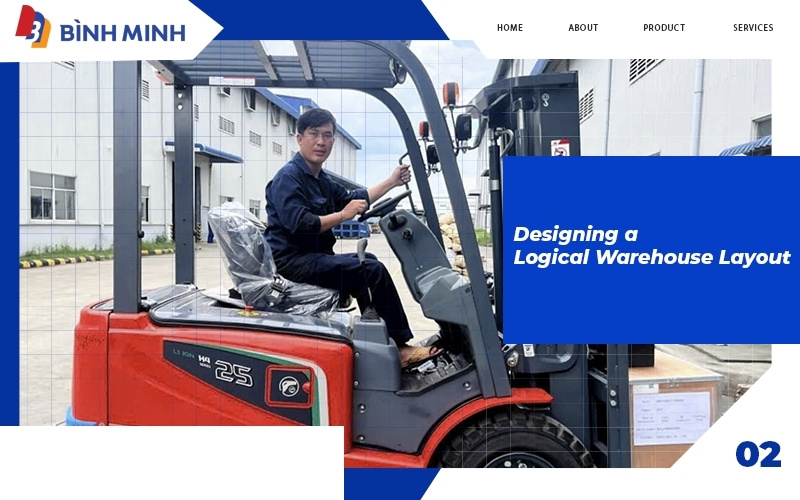
2. Designing a Logical Warehouse Layout
A well-designed warehouse layout not only maximizes storage space but also facilitates forklift movement, thereby improving operational efficiency. Here are some key principles in warehouse design:
- Wide aisles: One of the most important factors is designing aisles wide enough for forklifts to move easily between racks. Narrow aisles not only reduce movement efficiency but can also lead to accidents during operations. According to international standards, warehouse aisles should be between 3 to 3.5 meters wide to allow forklifts to maneuver comfortably. This can reduce goods movement time by up to 10%.
- Scientific storage zoning: Goods should be arranged based on usage frequency, size, and weight. Frequently used items should be placed in convenient locations for quick access and loading, optimizing forklift operation time.
- Maximizing vertical space: The vertical space in traditional warehouses is often underutilized. However, with the help of forklifts, companies can optimize warehouse height, installing tall racking systems to increase storage capacity. Research shows that using tall racks can increase storage space by up to 40%.
- Dedicated loading/unloading areas: A separate space for loading and unloading ensures that forklifts have ample room to move and avoids congestion during these tasks.
By designing a scientifically organized warehouse, companies can not only increase storage capacity but also optimize processes, reduce risks, and improve overall work efficiency.

3. Utilizing Vertical Space
One of the most effective methods for optimizing warehouse space is to take advantage of vertical space. Using forklifts capable of reaching high shelves is a way to fully exploit the height of the warehouse, especially in spaces with high ceilings. Solutions include:
- Installing high racking systems: Tall racks allow businesses to store more goods without needing to expand the warehouse floor space. Popular racking systems include selective racking, drive-in racking, and push-back racking. Each type has its advantages and disadvantages, but all help to optimize vertical storage space. A study from the U.S. Logistics Association found that installing high racks can increase storage space by 25-30%.
- Using reach trucks: These forklifts are designed to lift goods to high shelves while maintaining maneuverability. Reach trucks are particularly effective in narrow warehouses with high ceilings, helping to reduce operating costs and optimize space.
- Safety considerations: When utilizing vertical space, it’s essential to adhere to safety regulations. Racking systems must be stable and capable of handling heavy loads to prevent accidents during forklift operations. Surveys show that ensuring warehouse safety can reduce workplace accidents by 15%.
4. Efficient Inventory Management with Warehouse Management Systems (WMS)
Using warehouse management software (Warehouse Management System – WMS) is an optimal solution for businesses to manage their inventory more effectively, thus optimizing warehouse space. WMS features include:
- Inventory tracking: The software allows businesses to know the exact amount of stock on hand, making it easier to adjust incoming and outgoing goods, avoiding excess stock that wastes warehouse space.
- Smart goods classification: WMS enables the classification of goods by size, weight, and usage frequency. Frequently used items are placed in easily accessible locations, allowing forklifts to move more quickly.
- Space optimization: The software can suggest the best storage positions for different goods, optimizing warehouse space and reducing unused areas.
- Increased flexibility in management: Businesses can monitor the storage and movement of goods remotely through smart devices, improving overall warehouse management efficiency. According to Logistics Insights, using WMS can reduce operating costs by 15% and increase productivity by up to 25%.
5. Forklift Rental Services by Bình Minh Forklifts
Investing in forklift purchases requires a large capital outlay and may not always match a company’s usage needs. Therefore, forklift rental services are becoming increasingly popular. Bình Minh Forklifts offers diverse rental options to meet all customer needs.
Advantages of renting forklifts from Bình Minh:
- Variety of types: Electric, diesel, gas, hand pallet jacks, and more to meet every lifting need.
- Flexibility: Rent by the day, week, or month, tailored to specific projects and usage needs.
- Cost savings: No large upfront investment, only paying for rental time.
- Maintenance and repairs: Forklifts are regularly maintained to ensure stable operation.
- Technical support: A professional technical team is available 24/7 to support customers.
Additional services:
- Transportation: Forklifts are delivered to the customer’s location upon request.
- Training: Training in safe forklift operation for users.
- Insurance: Forklift


